

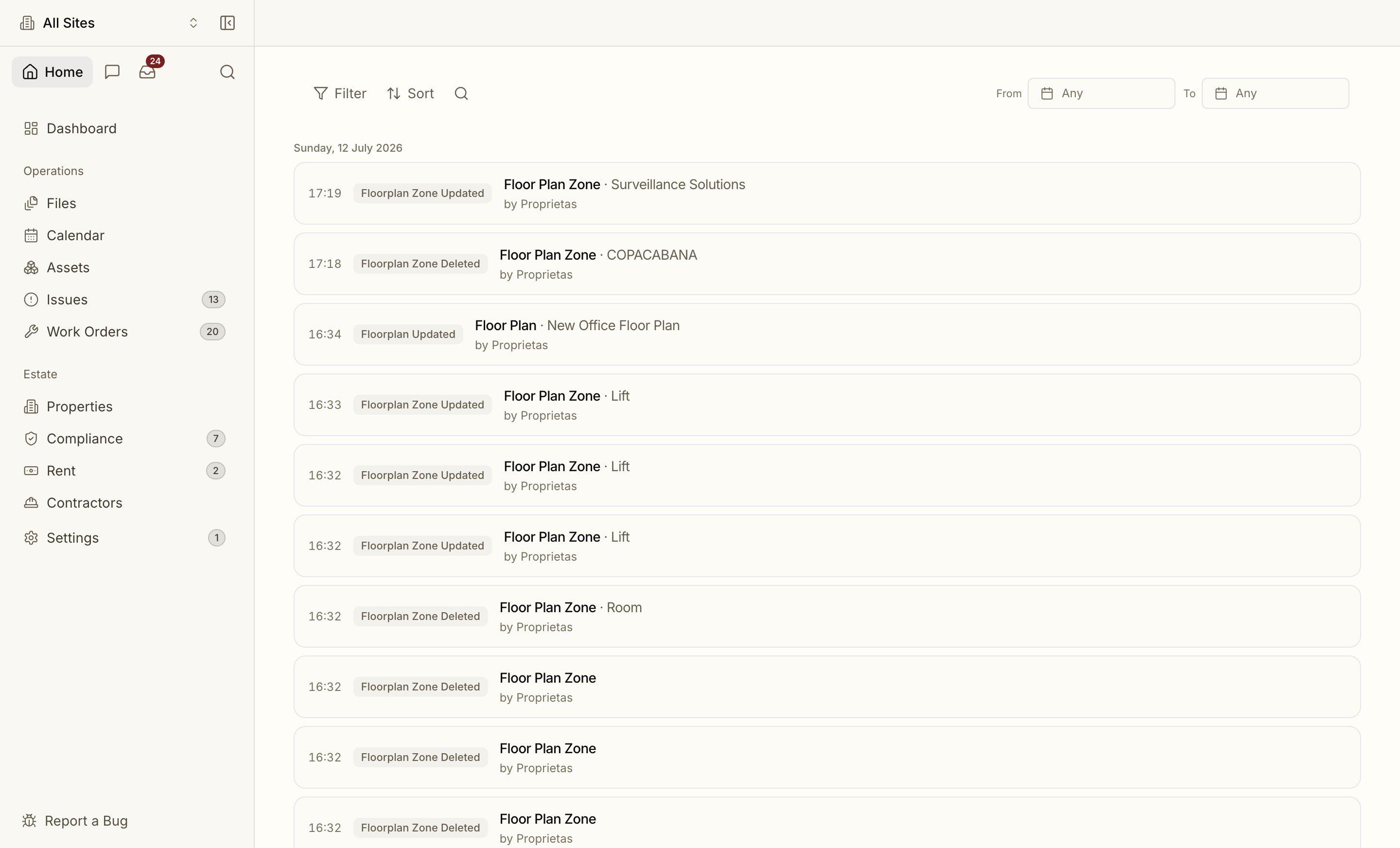
Logged by Default
Every write to a compliance, lease, contractor, work-order, financial or membership record produces an audit event in the same database transaction as the change itself. If the change is saved, so is its record — they can’t come apart. Each event captures:- Actor — the user (or the system, for automated jobs like reminders)
- Before and after — snapshots of what changed
- IP and user-agent — the request context
- Subject — exactly which record was touched
What’s Covered
The audit trail spans the whole product — over a hundred event types — including:- Compliance: certificate uploaded, replaced, regime pack applied
- Leases: uploaded, amended, break/review added or removed, deed created
- Members: invited, accepted, role changed, join requested / approved / denied
- Work orders: created, quoted, tender overridden, payment logged, completed via portal
- Billing: subscription started, upgraded, downgraded, payment succeeded / failed
- Contractors, properties, rent, documents, and data-rights actions (export, erasure)
In the App
The Audit Log (under Reports) is a read-only feed with filters for event kind, the record touched, the actor and a date range. It’s exportable, so you can hand an inspector or insurer exactly the slice they asked for.Audit history is retained for a minimum of seven years — aligned to insurance and statutory expectations.